Last updated: October 13, 2026
Key Takeaways
- Bing usually picks one representative URL from similar pages by weighing several signals, not by following rel=canonical alone.
- Canonical tags help, but Bing also considers redirects, internal links, sitemap URLs, and content similarity.
- The main duplicate-content signals are canonical tags, 301 redirects, internal links, sitemap entries, and page similarity.
- Conflicting signals can slow Bing’s trust in your preferred page, and Bing may choose another URL.
If Bing is choosing the wrong page, the answer is usually not “more SEO” but clearer signals. Bing ranking signals for duplicate content and canonicalization include canonical tags, redirects, URL consistency, internal links, sitemaps, and content similarity, and the wrong mix can leave the weaker URL indexed or ranking.
What Bing is actually trying to do with duplicate pages
Bing is trying to pick one representative URL from a cluster of near-identical pages, not punish duplication in a dramatic, Google-style way every time. That matters because a lot of duplicate content is accidental: tracking parameters, printer versions, HTTP and HTTPS variants, uppercase and lowercase URLs, faceted navigation, and syndication copies all create multiple URLs for the same or nearly the same text. Bing’s job is to decide which URL should carry the signals.
The practical question is not “does Bing hate duplicate content?” but “which URL does Bing trust enough to keep?” If Bing sees three versions of the same product page, it has to consolidate links, relevance, and crawl attention somewhere. If you do nothing, it may pick the wrong one.
I would separate the problem into two layers. The first is crawling and indexing: which URLs Bing discovers and stores. The second is ranking: which stored URL Bing surfaces for a query. A page can be indexed but not ranked, or ranked briefly and then replaced by the preferred version after Bing gathers more signals. That is why a clean canonical setup matters more than a clever rewrite.
A generic article usually stops at “use rel=canonical.” That is too shallow. Canonical tags are one signal, not a magic command, and they work best when the rest of the site agrees with them. Bing tends to trust consistency across signals more than a single tag in isolation.
How Bing ranking signals for duplicate content choose the canonical URL
Bing usually chooses the canonical URL by weighing multiple signals, not by obeying only the rel=canonical tag. The canonical tag is important, but Bing also looks at redirects, internal links, sitemap entries, URL patterns, and page similarity before it settles on one version.
A canonical tag says, “this is the preferred URL for this content.” A 301 redirect says, “this URL is gone; use that one instead.” Bing can treat those differently. A redirect is usually stronger because it changes the crawl path itself. A canonical tag is softer: it groups signals without necessarily removing the alternate URL from the index right away. For exact implementation details, consult an SEO professional and Bing’s documentation on canonicalization and redirects: https://learn.microsoft.com/en-us/bingwebmaster/.
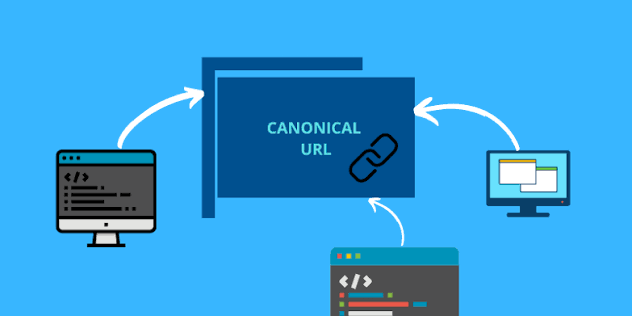
The best way to think about Bing’s canonicalization is as signal convergence. If the canonical tag points to URL A, the internal links point to URL A, the XML sitemap lists URL A, and the old duplicate URL 301 redirects to URL A, Bing gets a clean message. If those signals conflict, Bing may ignore your preferred version.
This is where many sites slip. A template may canonically point to the clean URL, while the navigation links still use parameterized URLs, and the sitemap includes both. That does not read as one instruction set. It reads as uncertainty.
One detail that gets missed: Bing is often dealing with duplicate clusters at crawl time, before ranking is even on the table. So a technically “correct” canonical can still lose if the site architecture keeps feeding Bing mixed versions. The strongest setup is not a single tag. It is a whole site that repeats the same choice in every layer.
Which Bing ranking signals matter most for duplicate content?
The biggest Bing ranking signals for duplicate content are canonical tags, 301 redirects, internal links, sitemap URLs, and page content similarity. Bing uses these together to decide which page deserves to rank and which duplicates should be folded away.
Here is the hierarchy I would use in practice:
- 301 redirects — strongest when a page truly has a replacement.
- Internal links — very strong because they reflect how the site itself describes its own URLs.
- rel=canonical — essential for near-duplicates and preferred versions.
- XML sitemap entries — useful as a discovery and preference signal.
- Content similarity and URL structure — the background evidence Bing uses to group duplicates before it even finishes parsing the page.
That order is not a published Bing scorecard. It is the way the signals tend to behave in real site architecture. A redirect is a directive. A canonical is a preference. Internal links are repeated endorsements. Sitemaps are a formal inventory. URL structure tells Bing whether two pages are likely copies before it even finishes parsing the body copy.
Bing also has to handle content it sees on other domains. For syndicated or scraped copies, stronger host signals, structured internal linking, and a clear canonical setup help Bing keep the original URL visible. If your copy is the syndication version, you should usually canonical back to the original source if the agreement allows it.
A lot of site owners overestimate the power of rewriting a few sentences. If the page exists at five URLs, changing the wording slightly does not solve the duplicate problem. Bing still sees a cluster. The ranking signal problem remains.
What goes wrong when canonical signals conflict?
Conflicting canonical signals make Bing slower to trust your preferred page, and in some cases Bing may choose a different URL than the one you specified. The cost is lost consolidation: links, relevance, and crawl attention can split across duplicate URLs instead of strengthening one page.
The cost is not just ranking uncertainty. Crawl budget gets wasted on URLs that should never have been crawlable. That matters most on large catalog sites, faceted navigation sites, and publishers with lots of archive paths. On a small brochure site, the damage may be contained. On a site with tens of thousands of near-duplicate URLs, it can become a real indexing tax.
The usual conflicts are easy to spot once you know the pattern:
- The page canonical points to the clean URL, but the page self-links to a parameterized version in the header or breadcrumb.
- The sitemap lists both versions.
- The redirect chain goes from one duplicate to another before landing on the canonical.
- The canonical tag points across unrelated pages because of a template mistake.
- HTTP, HTTPS, www, non-www, trailing slash, and case variants all remain live.
That last set is not theoretical. It is the classic source of duplicate clusters on older sites and CMS-heavy sites. If Bing has to resolve all of them at once, the result is often delayed consolidation.
Who this is not for: if you have a very small site with no parameters, no pagination issues, and no syndicated content, you do not need to obsess over every canonical edge case. You still need clean basics, but you do not need a complex canonical architecture.
What should I do first on a duplicate-content cleanup?
You should start by picking one URL version and making every signal agree with it within the same crawl cycle. That usually means fixing redirects first, then canonicals, then internal links, then sitemap entries.
If I were cleaning up a site for Bing, I would work in this order:
- Enforce one host and protocol: HTTPS, one preferred hostname, one trailing-slash style.
- 301 redirect all alternates to the chosen version.
- Add a self-referencing canonical to the preferred page.
- Make internal links point directly to the preferred URL.
- Remove duplicate URLs from the XML sitemap.
- Block crawl traps only after the preferred URL is already accessible, so Bing can still see the canonical path.
That sequence matters. If you add a canonical but leave five alternate URLs alive with equal internal link weight, Bing still has to choose. If you redirect the duplicates but keep the sitemap and navigation inconsistent, you keep creating mixed signals.
I also prefer to keep canonical tags precise. Canonicalization is not a “similar page” hint for every situation. If two pages are genuinely different in intent, forcing them into one canonical can erase useful search visibility. A category page and a product page are not duplicates. A printer-friendly copy and the main article usually are. A localized page and a translated page may be related, but they are not always duplicates in Bing’s eyes.
The safest rule is to canonicalize only when the pages are truly the same resource in search terms. If the pages answer different queries, do not smash them together just to reduce index count.
Can Bing ignore my canonical tag?
Yes, Bing can ignore a canonical tag when the rest of the signals disagree or the tag looks unreliable. That usually happens when the canonical points to a page that is blocked, redirected, non-indexable, or weaker than the duplicate page in the broader site structure.
A canonical tag is a recommendation, not a law. If the canonical target returns a 404, is blocked by robots.txt, noindexed, or points somewhere nonsensical, Bing has reason to distrust it. The same is true when the canonical target is far removed from the duplicate set and the page content does not match closely.
This is why canonical chains are risky. Page A canonicals to B, B canonicals to C, and C is the page you actually want indexed. That creates ambiguity. You want one clear hop, not a maze.
Bing may also override your canonical if the duplicate page has stronger signals and the canonical appears accidental. For example, if a CMS template incorrectly canonicals every paginated page to page 1, Bing can still decide the later pages deserve separate treatment if their content and links support that. That is not a bug. It is Bing refusing a bad instruction.
The trade-off is obvious: a strict canonical setup gives you control, but only if the target URL is credible. If the preferred page is weak, blocked, or inconsistent, Bing may pick differently. That is useful when Bing makes a better choice than a broken template, and frustrating when your site design created the confusion in the first place.
Before and after: what a clean canonical setup looks like
A clean canonical setup makes the preferred URL easy to discover, crawl, and trust. The difference is less about one tag and more about agreement across the whole site.
| Metric | Before | After | Change | Timeline |
|---|---|---|---|---|
| Indexable URL versions for one page | 4 or 5 variants | 1 preferred URL | Consolidated variants | After redirects and canonicals |
| Internal link targets | Mixed across variants | All to canonical URL | Signal alignment | After navigation cleanup |
| Sitemap entries | Multiple duplicates | Single preferred entry | Reduced ambiguity | After sitemap update |
| Redirect path | None or inconsistent | One direct 301 | Clear replacement signal | Immediate after rollout |
| Canonical target | Missing or conflicting | Self-referencing on preferred page | Stronger preference signal | On-page deployment |
That table is deliberately simple because the real work is in consistency. If you change only one row, the others still leak confusion. The fastest wins often come from redirects and internal links, because they affect every crawl. The canonical tag matters most when the duplicate pages must still exist for technical reasons, such as faceted navigation or printer views.
What I would monitor after the fix
I would monitor index selection, crawl patterns, and duplicate URL persistence for at least several crawl cycles after the fix. Bing does not always swap canonical choices instantly, especially on larger sites.
The main checks are straightforward:
- In Bing Webmaster Tools, inspect whether Bing is still indexing the wrong variant.
- Confirm that the preferred URL is the one appearing in search results for brand and query tests.
- Watch server logs for crawl requests to old duplicate URLs.
- Check whether redirected URLs still get crawled heavily after the deployment.
- Verify that the canonical target remains live, indexable, and self-referencing.
If the wrong URL keeps winning, the cause is usually not mysterious. A duplicate sitemap entry, a self-link in templates, or a leftover parameter route is still feeding Bing mixed signals. On the other hand, if the preferred URL starts to surface but rankings remain weak, the issue may be page quality or relevance, not canonicalization.
I would not treat canonicalization as a one-time fix. It is closer to site hygiene. New parameter patterns, CMS changes, and content migrations can reintroduce duplicate clusters months later.
FAQ
Does Bing treat duplicate content as a penalty?
No, not usually. Bing is more likely to cluster or filter duplicates than to apply a visible penalty, unless the duplication is part of spam or manipulation.
Is rel=canonical enough for Bing?
No. It helps, but it works best with 301 redirects, consistent internal links, and a clean sitemap.
Should I canonical paginated pages to page 1?
Usually no. Pagination often needs its own indexable URLs if each page contains distinct items or text.
Does Bing prefer 301 redirects over canonicals?
In practice, yes. A redirect is a stronger signal because it removes the old URL from the path.
What is the most common canonical mistake?
Pointing canonicals at a preferred URL while leaving the site’s links, sitemap, and parameter URLs unchanged.
Drafted with AI; not yet reviewed by a person.