Last updated: October 13, 2026
Quick Answer: Bing ranking mechanics and search signals usually come down to 3 core checks: can Bing crawl and index the page, can it understand the topic, and does the page have enough trust signals to rank. If you want a concise working model, use the Bing ranking mechanics and search signals framework: crawlability + relevance + trust.
Bing ranking mechanics and search signals come down to three things: can Bing crawl and understand the page, does the page look useful for the query, and do signals around the page support that judgment. If I had to reduce the whole system to one sentence, I’d say Bing rewards pages that are technically easy to index, clearly relevant in language and structure, and credible enough to trust for the query type. For a deeper official reference, Microsoft’s Bing Search Essentials explains the basics of crawl, index, and ranking behavior: https://www.bing.com/search/resources/searchessentials
What Bing ranking mechanics actually are
Bing ranking mechanics are the rules Bing uses to choose, order, and sometimes re-order pages for a search query. The core idea is simple: Bing first has to discover and index a page, then it has to decide whether that page matches the query, then it has to rank it against other candidates using content signals, links, freshness, and context. Microsoft’s own Bing Webmaster Guidelines and Bing documentation on crawl, index, and ranking signals point to that same sequence.
The piece many generic guides miss is that Bing does not behave like a single-score machine. It uses a layered process. A page can be technically accessible and still lose because the language is vague. A page can be highly relevant and still fail if Bingbot cannot reach the important content quickly. A page can have decent links and still underperform if the intent match is weak.
That matters because Bing is often a little more transparent than people expect about what it values. It has long emphasized crawlability, clean HTML, descriptive titles, strong topical relevance, and trusted signals from the wider web. It also pays attention to the page’s semantic clarity, which means the words on the page need to say what the page is about in plain terms. If your page hides the answer in marketing copy, Bing has less to work with.
I also want to be blunt about something that trips up a lot of SEO advice: Bing ranking mechanics are not “just Google, but smaller.” Some fundamentals overlap, but Bing still leans differently in a few places. It is generally more sensitive to exact keyword usage in the title and body than many SEO writers admit, and it has historically relied more visibly on traditional on-page relevance and link authority than on elaborate engagement narratives. That makes it friendlier to clear, well-structured pages and less forgiving of vague copy.
For an official starting point, I would use Microsoft’s Bing Webmaster Guidelines and Bing Search Quality documentation:
- Bing Webmaster Guidelines: https://www.bing.com/webmasters/help/webmaster-guidelines-30fba23a
- Bing Search Essentials: https://www.bing.com/search/resources/searchessentials
How does Bing decide what ranks first?
Bing decides what ranks first by combining relevance, quality, authority, and context, then adjusting for the query’s intent and the user’s location, device, and search history when those signals matter. The first filter is relevance: does the page clearly answer the query? The second is quality: is the page useful, readable, and non-spammy? The third is authority: do links and references suggest other sites trust it? The fourth is context: is this the right result for this searcher right now?
That sequence sounds obvious, but the trade-offs are not. I think the most common mistake is assuming one signal can overpower the others. A page with heavy keyword targeting but weak structure may still lose. A page with strong authority but thin copy may also lose. Bing wants the whole package.
Query intent matters a lot here. A navigational query such as a brand name behaves differently from an informational query such as “how Bing ranking works.” A commercial query such as “best CRM for small business” introduces more review and comparison behavior. Bing has to infer whether the searcher wants a definition, a list, a product page, or a local result. Pages that match the wrong intent rarely hold top positions for long.
Bing also appears to reward pages that are explicit rather than decorative. Exact or near-exact phrasing in titles, headings, and opening paragraphs still matters. That does not mean keyword stuffing. It means the page should say its topic in normal language fast enough for both crawler and reader to understand it.
One thing I would not overstate is “user engagement” as a magic ranking lever. Search engines can observe some behavior patterns, but no outside writer can honestly claim a precise formula. Bing has enough signals already to rank a page without needing a mystical dwell-time story. If a guide tells you to optimize for “engagement” with no specifics, it is usually avoiding the harder work of relevance and technical hygiene.
If you want the practical version, I’d summarize Bing’s ranking decision like this:
Can Bing find it? Can Bing understand it? Can Bing trust it? Does it satisfy this query better than the alternatives?
That is the question behind every SERP.
Which Bing search signals matter most?
The strongest Bing search signals are crawl accessibility, on-page relevance, backlinks, page freshness when relevant, structured data, and domain-level trust signals. I would treat them as a stack, not a checklist, and I would still recommend consulting a qualified SEO professional when the site has technical debt or compliance constraints. Microsoft’s Bing Webmaster Guidelines and Schema.org are the most reliable starting points for this work:
- Bing Webmaster Guidelines: https://www.bing.com/webmasters/help/webmaster-guidelines-30fba23a
- Schema.org vocabulary: https://schema.org/
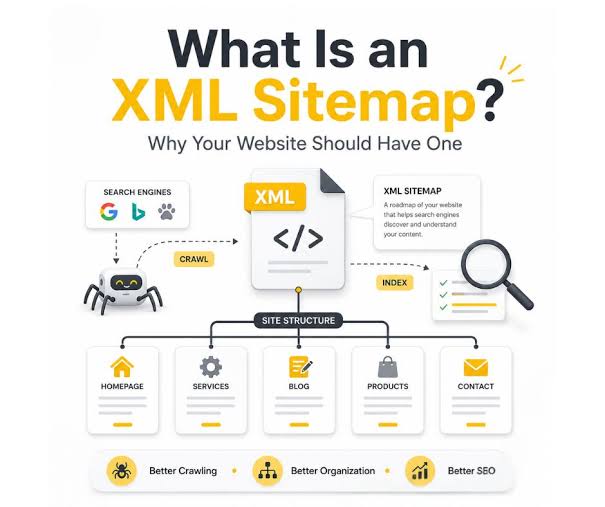
Crawl and index signals come first. Bingbot needs to reach the page, read the HTML, and see the main content without fighting scripts or blocked resources. If important text loads late or depends on client-side rendering, Bing can still index it, but the margin for error grows. Clean internal linking, sitemaps, canonical tags, and stable URLs help Bing map the site faster.
On-page relevance signals are next. These include the title tag, H1, subheadings, body copy, image alt text, and semantic relationships between terms. Bing still seems to benefit from straightforward topical language. A page about “Bing ranking mechanics” should literally say that phrase or close variants in natural places. If the vocabulary is too clever, the machine has to infer more than it should.
Link signals still matter. Bing has long used links as a trust indicator, even if link influence is not as simple as the old PageRank-era story. I would not chase raw volume. A handful of relevant, authoritative links tends to be more valuable than dozens of weak ones. Links from pages in the same topical neighborhood help Bing place your page in the right context.
Freshness signals matter only when the query deserves freshness. News, trends, product updates, and changing regulations all push Bing toward recent content. Evergreen explainer pages do not need constant rewrites, but they do need maintenance if the facts change or if competitors publish newer, cleaner versions.
Structured data signals can help Bing identify entities, products, FAQs, reviews, and other page types. Markup does not replace good content, but it reduces ambiguity. If the page is clearly a product page, article, or local business listing, structured data can support that interpretation.
Trust signals come from the domain and the page. A clear About page, contact details, consistent branding, visible authorship, and a history of non-spammy content all help. I would not call these direct ranking hacks. I would call them credibility scaffolding.
The trade-off is that signal strength varies by query. For a local restaurant, location signals and business listings may matter more than editorial backlinks. For a technical article, topical depth and link authority may matter more than freshness. For a branded search, entity recognition and consistency can dominate. Anyone selling one universal Bing formula is simplifying too much.
Why Bing ranking mechanics punish weak technical SEO
Bing ranking mechanics punish weak technical SEO because Bing cannot reward a page it cannot reliably crawl, render, or classify. Technical problems do not always bury a site instantly, but they can create a ceiling that limits how far the page can climb. The page may rank intermittently, rank for the wrong queries, or fail to win against simpler competitors.
The main technical issues I would watch are crawl blockers, duplicate URLs, broken canonicalization, slow response times, and JavaScript-heavy rendering. Bing’s crawler is capable, but every layer of complexity adds uncertainty. If the content lives behind multiple script calls or if the same page appears under many URL variants, Bing has to spend more effort on the basics before it can evaluate quality.
Canonical tags matter here. A site with parameterized URLs, print versions, tracking parameters, or filter states can easily confuse indexing unless the canonical signals are consistent. That is not glamorous SEO, but it is often what separates pages that stabilize from pages that drift.
Site architecture matters too. Bing tends to understand sites better when important pages sit close to the homepage and are connected through logical internal links. Deep pages are not doomed, but they need stronger support. Orphan pages are a recurring problem because they can be found but not valued properly.
HTTPS, mobile usability, and page speed are not optional hygiene. I would not claim that a fast page wins solely because of speed, but a slow or unstable page can absolutely lose. If two pages are close in relevance, the one that loads more cleanly has fewer friction points. Bing’s own documentation has consistently emphasized good user experience and technical accessibility.
Here is the uncomfortable truth: a lot of “content SEO” advice ignores this layer because it is harder to sell. Yet Bing ranking is often decided by boring technical discipline. If your page title is perfect but the content is hidden behind an app shell, the perfect title only gets you so far.
Two official references worth reading are Bing’s guidance on crawl and index management and Schema.org for structured data standards:
- Bing Webmaster help on crawl and index: https://www.bing.com/webmasters/help/webmaster-guidelines-30fba23a
- Schema.org vocabulary: https://schema.org/
What content signals does Bing seem to reward?
Bing seems to reward content signals that make a page easy to classify, easy to trust, and easy to prefer over alternatives. That means specific titles, direct answers, semantically related terms, and enough depth to resolve the query without padding.
The title tag is still one of the strongest signals. A title that clearly states the topic and matches the search language gives Bing less work to do. The H1 should reinforce the same topic rather than introduce a creative detour. Subheadings should break the subject into obvious parts. When the structure mirrors how a person thinks through the problem, Bing usually gets a better signal about topical coverage.
Body content matters even more than a lot of site owners expect. Bing can read beyond exact-match keywords, but it still benefits from direct phrasing. If the query is about Bing ranking mechanics, the page should use that term naturally, then expand into related concepts such as crawlability, relevance, links, entity understanding, and freshness. Thin pages that repeat a phrase without substance rarely hold up.
I also think Bing responds well to entity-rich writing. That means specific names, standards, product types, organizations, and relationships instead of vague claims. For example, saying “Bing Webmaster Tools,” “Schema.org,” “canonical tags,” and “XML sitemap” gives the crawler and the reader a more precise map than generic phrases like “optimization features.”
Freshness is a content signal, but only when the subject changes. A static guide can stay strong if it is accurate and maintained. A stale guide that mentions old interfaces, deprecated tools, or outdated recommendations loses trust fast.
One content signal people underestimate is answer completeness. Bing is trying to satisfy the query, not just find a page that mentions the keywords. If the page leaves out the obvious follow-up question, the user returns to search, and the result can weaken over time. That is one reason I prefer guides that answer adjacent questions in the same page rather than scattering them across overly narrow posts.
I would not chase word count for its own sake. A 3,000-word page with unfocused filler is weaker than a 1,200-word page that answers the actual question cleanly. The real signal is coverage, not length.
Why links still matter, and where they do not
Links still matter to Bing because they are one of the oldest and most durable trust signals on the web, but they do not matter equally for every query or every page. A link profile can support ranking, yet it cannot rescue a poor match to intent or a technically broken page.
The links Bing values are usually the ones that make editorial sense. A page about search engines cited by a respected marketing publication carries more weight than a random directory listing. Relevance of the linking page matters. Topical proximity matters. The anchor text can help, but over-optimized anchors can look unnatural. A natural mix is safer than a pattern that looks engineered.
I would also separate authority from popularity. Popular pages are not always authoritative, and Bing still has to judge whether the source is credible in the topic area. A well-linked page on the wrong topic can still lose to a smaller, more focused page.
Where links do not matter as much is on highly local or highly branded queries, where entity and map-style signals may dominate. A local dentist page may benefit more from business listings, reviews, and consistent NAP data than from general editorial backlinks. A branded query may depend more on entity understanding and official-site consistency than on link volume.
I would also caution against treating links as a pure acquisition problem, and I would recommend consulting a qualified SEO professional when link building needs policy review or risk assessment. Some of the best link signals come from assets that earn mentions because they are genuinely useful: original explanations, calculators, checklists, research summaries, or tools. That is not a guarantee, and I am not pretending it is easy. But it is safer than building a link plan around shortcuts.
The honest downside is that link building takes time and cannot be faked indefinitely. Bing has enough context to see when a site’s backlink profile is out of step with its quality. If the content is thin, the links eventually look like props rather than endorsements.
What goes wrong most often with Bing SEO?
What goes wrong most often with Bing SEO is that the site chases tricks while ignoring clarity, crawlability, and intent. I see the same failure pattern repeatedly: pages are technically published, but Bing has little reason to elevate them.
The first failure is ambiguous topic targeting. A page tries to rank for a broad query but never says what it is in plain language. The title is clever, the H1 is vague, and the body hides the answer until paragraph six. Bing can work with subtlety, but it should not have to decode a puzzle.
The second failure is duplicate or near-duplicate pages. Ecommerce filters, city pages, tag pages, and recycled service pages can create a site full of thin variants. Bing has to choose among them, and the wrong page may win or none may win strongly. Canonicalization, pruning, and better architecture usually beat publishing yet another similar page.
The third failure is JavaScript dependency. If the main content is not visible in the initial HTML or if critical internal links appear only after client-side actions, Bing’s job gets harder. It may still index the page, but the risk goes up. The page may be slower to understand and less stable in ranking.
The fourth failure is over-optimized copy. Repeating the same phrase in every heading and paragraph does not prove relevance; it often proves insecurity. Bing does not need a page to scream the keyword. It needs the page to cover the topic naturally and fully.
The fifth failure is thin trust signals. Pages with no visible authorship, no contact information, no about page, no editorial standards, and no external validation give Bing fewer reasons to trust them. That does not mean every site needs a media-company footprint. It does mean the site should look like it belongs to a real publisher with a point of view.
This is the section where I would name the cost plainly: bad Bing SEO is usually not one bad ranking drop. It is months of wasted content production. The site keeps publishing pages that do not earn stable positions because the underlying mechanics are wrong.
What should I fix first if I want Bing traffic?
You should fix crawl access, page clarity, and internal linking first if you want Bing traffic. Those three changes usually produce more movement than a cosmetic content rewrite, especially on sites with technical debt.
Start with crawl access. In Bing Webmaster Tools, check for blocked resources, index coverage issues, duplicate URLs, and sitemap problems. Make sure the important pages are included in a clean XML sitemap and linked from other pages the crawler can reach. If the page is important, do not bury it three clicks deep behind filters or scripts.
Next, fix page clarity. The title should say what the page is. The H1 should echo that topic. The first paragraph should answer the obvious question in plain English. The subheadings should organize the next layers of the answer. If the page is a service page, say what the service is and for whom. If it is an article, state the topic fast. Bing does not need a lyrical opening. It needs a clear one.
Then fix internal linking. Important pages need incoming links from relevant pages across the site. Those links should use descriptive anchor text, not “click here.” Related pages should point to each other in ways that make sense to a human. This helps both discovery and topic classification.
After that, review structured data. Use the appropriate Schema.org type where it fits: Article, Product, FAQPage, LocalBusiness, Organization, and so on. Do not spam markup just because a plugin offers it. Wrong schema is noise. Correct schema is a signpost.
Only after those layers are stable would I spend serious time on content expansion, link earning, and freshness updates. That order matters because a site with broken basics can publish all day and still underperform.
A practical rule I would use: if the page would be hard for a smart human to categorize in 10 seconds, Bing may struggle too. Fix that first.
Bing ranking mechanics vs Google: what is different?
Bing ranking mechanics differ from Google mainly in how visibly they reward straightforward on-page signals, traditional links, and explicit topical phrasing. The overlap is large, but the emphasis is not identical.
Bing tends to be friendlier to exact and near-exact keyword usage in titles and headings when that usage feels natural. It also often seems more comfortable with clean, traditional SEO fundamentals: descriptive metadata, clear site architecture, and classic link authority. That does not mean it ignores modern relevance methods. It means the old fundamentals still carry real weight.
Google’s systems have become famously layered and behaviorally complex, so many SEO writers assume Bing works the same way but with fewer data points. I do not think that is the best mental model. Bing still uses many sophisticated signals, but it often appears more receptive to plainly written pages that are easy to classify. If the content is clear and the site is technically clean, Bing can be relatively straightforward to satisfy.
That difference creates a strategy choice. If your site is content-heavy, editorial, or B2B, Bing can be very receptive to organized, semantically clear pages with good internal structure. If your site depends heavily on app-like rendering, thin affiliate copy, or aggressive template reuse, Bing may be less forgiving than you hope.
The downside of chasing Bing specifically is that some tactics are easy to overdo. Keyword repetition, exact-match domains, and heavy anchor text optimization can look more tempting than they should. I would not build around any one of them. The safer bet is a page that is genuinely easy to understand and hard to confuse.
So the difference is not that Bing has a different universe of SEO. It is that Bing often rewards the basics with less ceremony. That is good news for sites that write clearly and maintain their technical house. It is bad news for sites that hoped jargon could substitute for structure.
Key Takeaways
- Bing ranks pages by combining crawlability, relevance, trust, and query intent.
- Clear titles, clean HTML, and obvious topical language still matter a lot.
- Links help, but they work best when they come from relevant, credible sources.
- Technical problems can cap performance even when the content is good.
- Bing is not a place to hide weak pages behind clever copy or messy architecture.
- The fastest wins usually come from fixing access, clarity, and internal links first.
FAQ
Does Bing rank pages differently from Google?
Yes. Bing often places more visible weight on straightforward on-page relevance, clean site structure, and traditional link signals, though the two engines overlap on many fundamentals.
Does Bing care about keywords in titles?
Yes. A clear title that matches the search intent helps Bing understand the page faster, but stuffing the title with repeated terms can hurt readability and trust.
Do backlinks matter for Bing?
Yes. Relevant, authoritative links still help Bing judge trust and topical credibility, but links cannot rescue thin content or poor technical setup.
Is structured data important for Bing?
Yes. Structured data can make page type, entities, products, and FAQs easier to interpret, which helps Bing classify the page more accurately.
What should I fix first for better Bing rankings?
I would start with crawl access, title and heading clarity, and internal linking, because those changes usually have the quickest impact on how Bing discovers and understands the site.
Drafted with AI; not yet reviewed by a person.